27 Club
A coincidence became a cultural myth. I explored the 27 Club from both sides: first by testing the legend against the data, then by fabricating the evidence that could make it feel true.
- Medium
- Data visualization, speculative storytelling
- Year
- 2019
- Pieces
- Three record sleeves; white-lighter artifact
- Materials
- Gloss UV ink, 3D prints, brass, silk

The myth
Brian Jones, Jimi Hendrix, Janis Joplin, Jim Morrison, Kurt Cobain and Amy Winehouse share one famous coincidence: they all died at 27. Jones, Hendrix, Joplin and Morrison died within just two years of one another, between 1969 and 1971.
That coincidence became the foundation of the 27 Club. Around it grew darker folklore: that 27 is cursed, that fame was bought through a deal with the Devil, and that its members carried an unlucky white lighter.
The question wasn’t only whether the myth was true, but why it felt true.

Two ways in
I split the project in two.
Fact
Measure the pattern.
Strip the legend back to evidence: if 27 isn’t statistically exceptional, what patterns do the deaths actually reveal?

Fiction
Manufacture the myth.
Do the opposite. Accept the superstition as true and invent the physical evidence that a curse might leave behind.
Fact
The number isn’t the pattern
The first finding breaks the premise. A 2011 BMJ study of 1,046 musicians found no special spike at 27: fame increased the risk of dying in their 20s and 30s, but 27 itself was not exceptional. In a separate dataset of reported pop and rock deaths from 1950–2010, 1.3% died at 27; the most common age was 56.
- died at 27
- 1.3%
- most common age at death
- 56
Pop and rock musicians whose deaths were reported from 1950 to 2010. Dianna Kenny, University of Sydney, in The Conversation, 2015.
So I stopped counting ages and started counting causes.
I expanded the research beyond age 27 and collected musicians who died from the same causes associated with the club’s best-known members. Three categories stood out: opiates, barbiturates and alcohol.
Turning the count into records
Each category became a record sleeve, with its format carrying the data: a 12-inch LP for opiates, a 10-inch EP for barbiturates and a 7-inch single for alcohol.
The fronts name each cause in gloss UV ink, interrupted by a tactile symbol—a spoon, pills or bottle. The backs list the musicians in white-on-white ink. Those who died at 27, and the number 27 itself, rise higher from the surface through additional passes of ink.


The three record sleeves hang in a column, largest first: a 12-inch LP printed SEDATE with an embossed spoon, a 10-inch EP printed SLEEP with embossed pills, and a 7-inch single printed DRINK with an embossed bottle, each with its black record peeking out. Scrolling brings each one up in turn and turns it over to show the names on its back. Use the arrow keys to turn the one in view.
FrontSEDATE in gloss UV ink, interrupted by an embossed spoon.
BackEvery musician opiates killed, white on white. Those who died at 27 rise higher.
FrontSLEEP in gloss UV ink, scattered with embossed pills.
BackEvery musician barbiturates killed, white on white. Alan Wilson, Brian Jones and Jimi Hendrix, who died at 27, rise higher.
FrontDRINK in gloss UV ink, interrupted by an embossed bottle.
BackEvery musician alcohol killed, white on white. Amy Winehouse, who died at 27, rises higher.



Making data tactile
I modelled the spoon, pills and bottle in CAD and 3D printed them at high resolution before applying them to the UV-printed sleeves.
The information is intentionally quiet: almost invisible head-on, then revealed through light, shadow and touch.


The evidence didn’t support the legend.
So I stopped trying to prove it.
And started pretending it was true.
Fiction
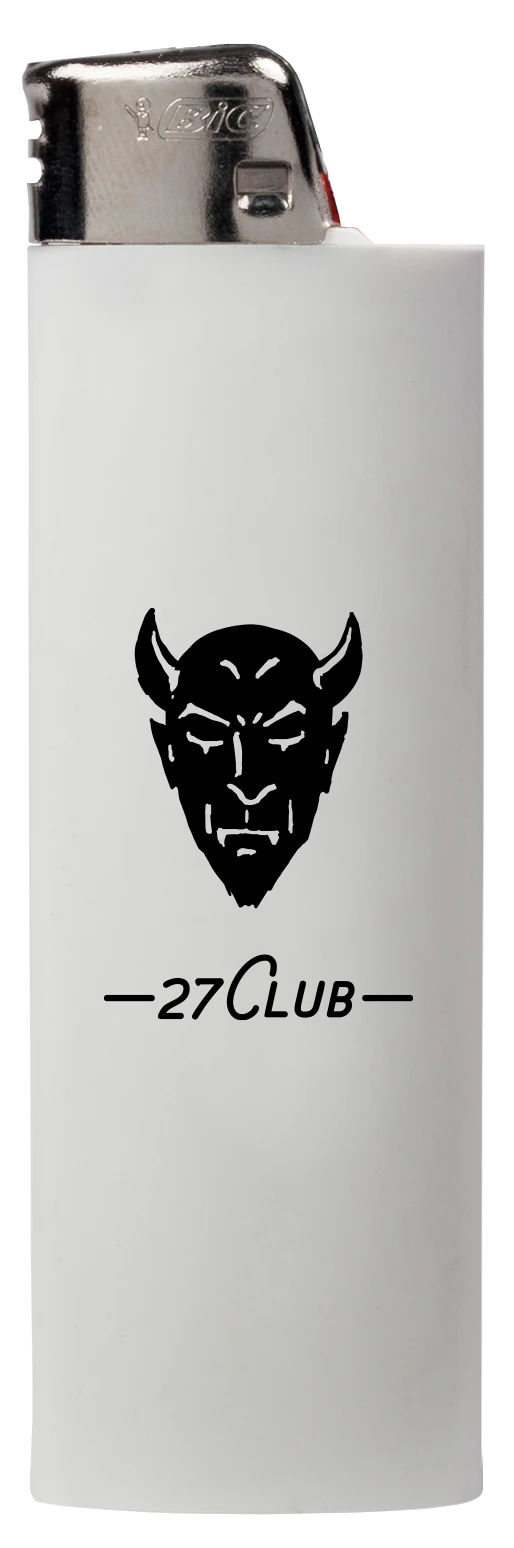
The white lighter
Of all the 27 Club’s legends, the white lighter is the most persistent. The story goes that Jimi Hendrix, Janis Joplin, Jim Morrison and Kurt Cobain each had a white lighter on them when they died, and that carrying one invites the same fate.
The myth is so strong that the superstition is still alive.
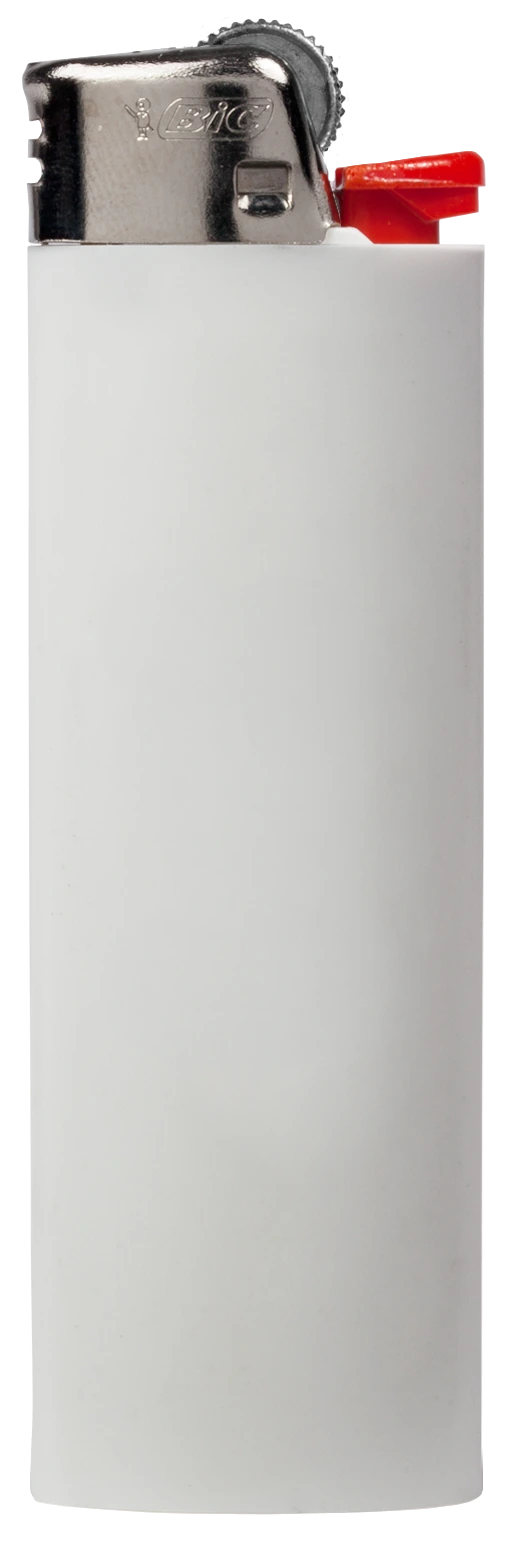

That belief became the brief.
The heirloom and the contract
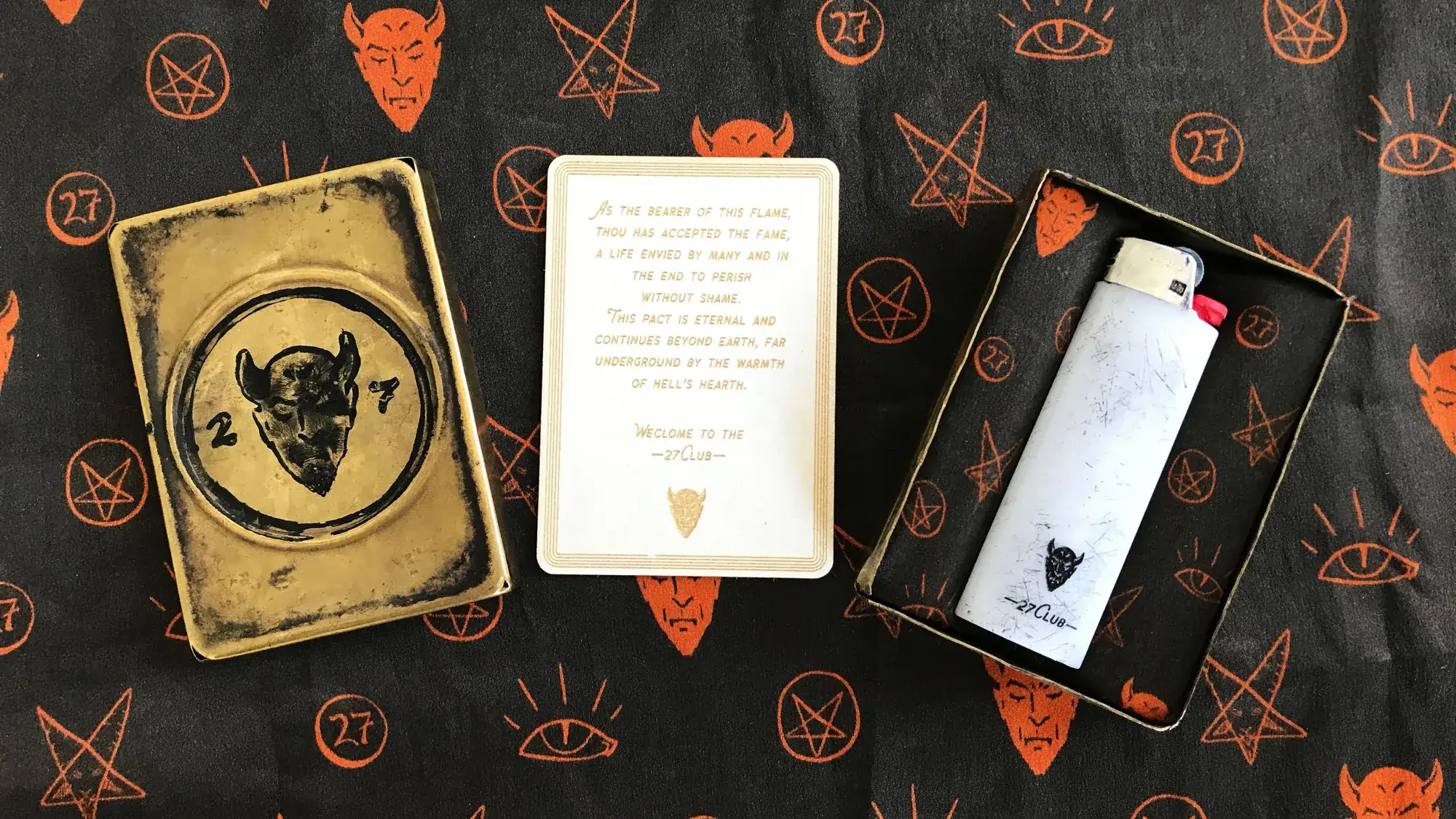
I imagined one white lighter passed from member to member: a cursed heirloom and the receipt for a bargain with the Devil.
Its contract turns the rumor into bureaucracy. The front sets the terms of the pact; the back records each artist’s signature, when their fame began and the month it expired.
The lighter is struck, the contract turns, and the dates appear one by one, as though heat were exposing invisible ink.
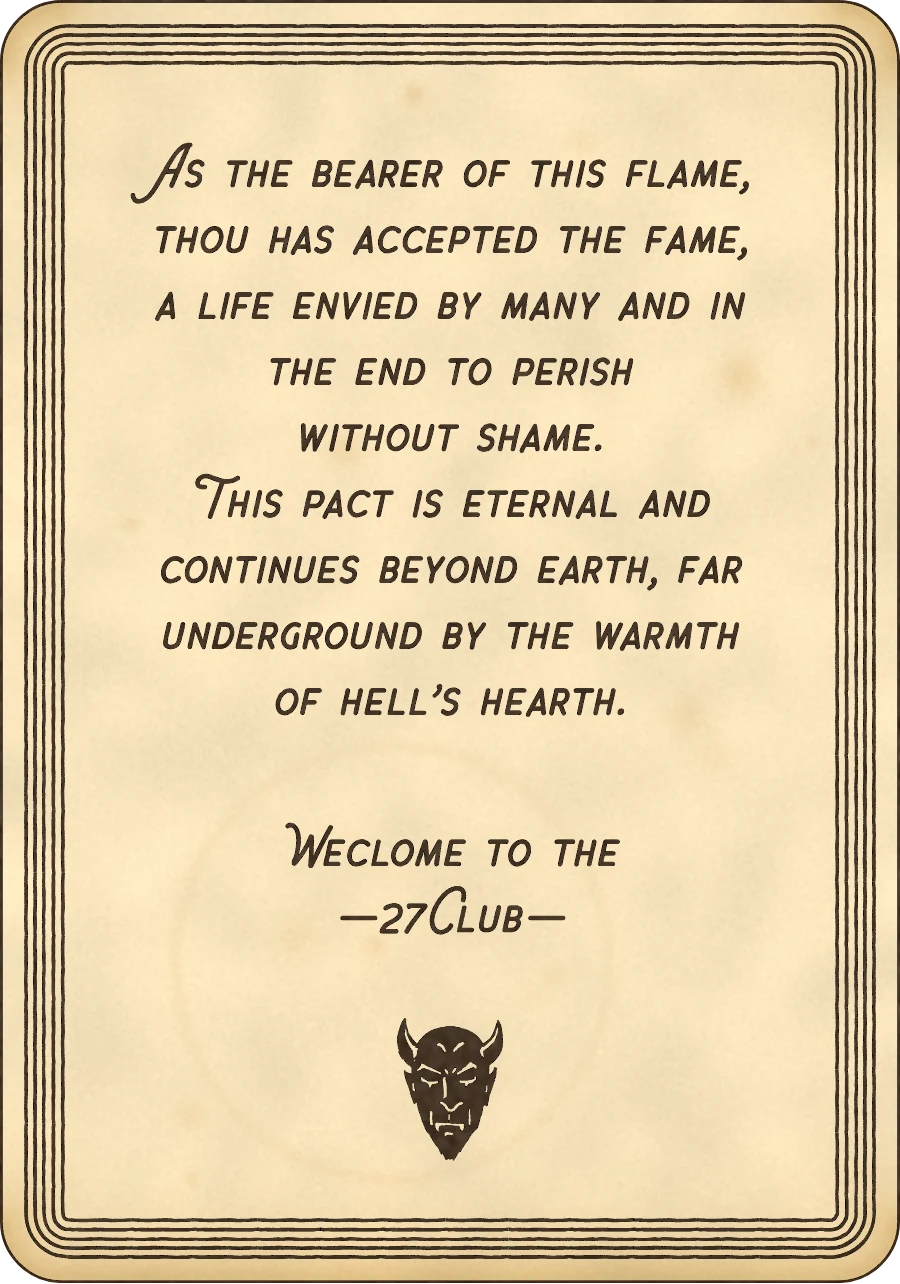
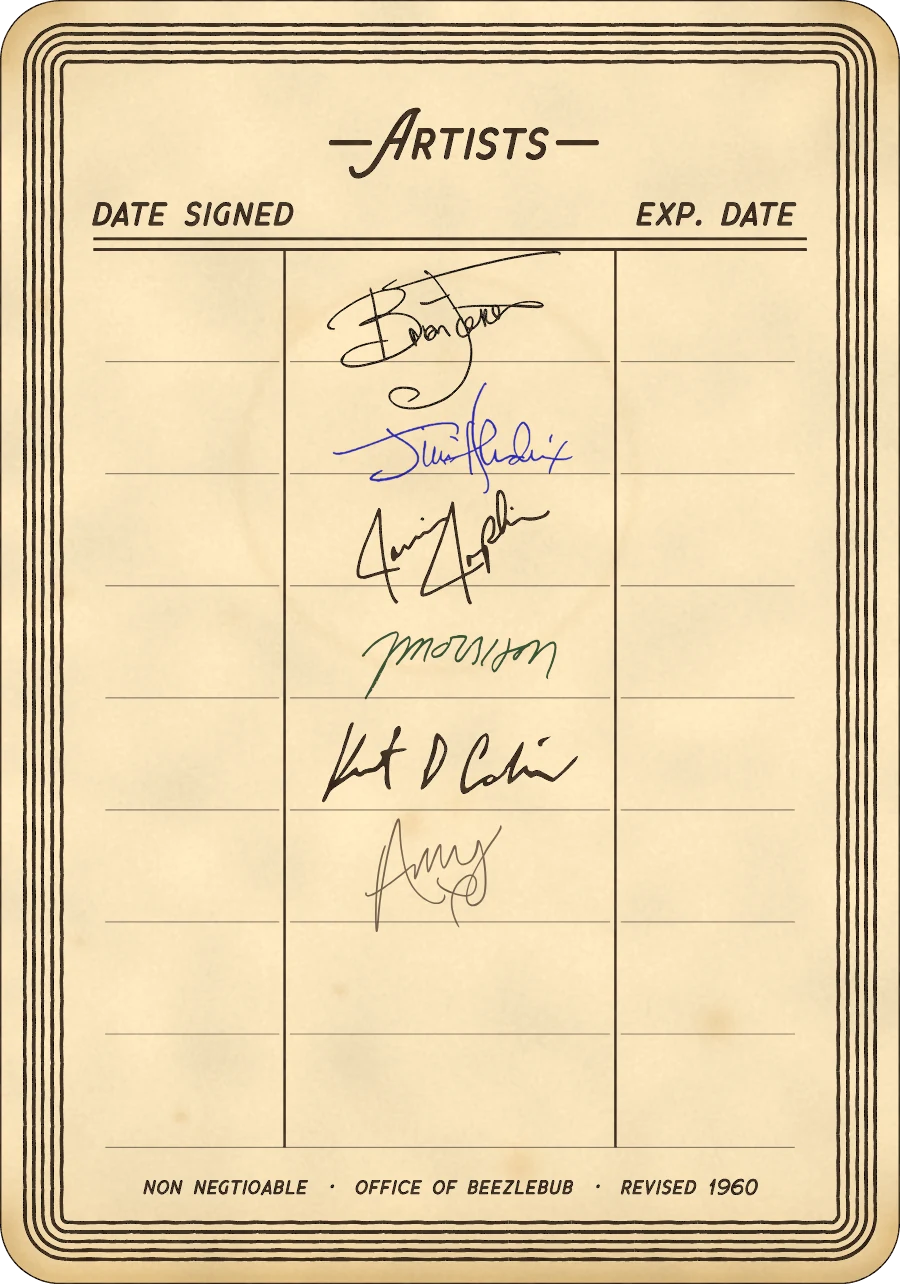


The contract card. On the front, the terms: “As the bearer of this flame, thou has accepted the fame, a life envied by many and in the end to perish without shame. This pact is eternal and continues beyond earth, far underground by the warmth of hell’s hearth. Welcome to the 27 Club.” On the back, headed Artists, a signature for each member, with the date they signed and the date it expired: Brian Jones, signed October 1964, expired July 1969; Jimi Hendrix, signed October 1966, expired September 1970; Janis Joplin, signed June 1967, expired October 1970; Jim Morrison, signed April 1967, expired July 1971; Kurt Cobain, signed February 1991, expired April 1994; Amy Winehouse, signed April 2003, expired July 2011.
Fabricating the evidence
I laser-cut a rubber stamp for the devil mark on the brass, laser-etched the cards, hand-stamped the dates and drew the repeating silk pattern before printing it.
Every surface was designed to feel old, handled and plausible—as though the object had been circulating for decades.
Between evidence and belief
Fact reduces the legend to patterns that can be counted.
Fiction does the opposite: it gives the legend an object you can hold.
Together, the two halves ask a more interesting question than whether the 27 Club is real:
How does a coincidence become something people believe?